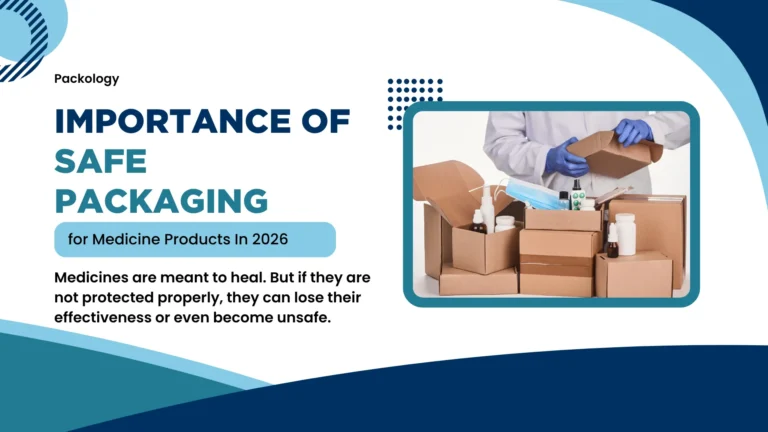
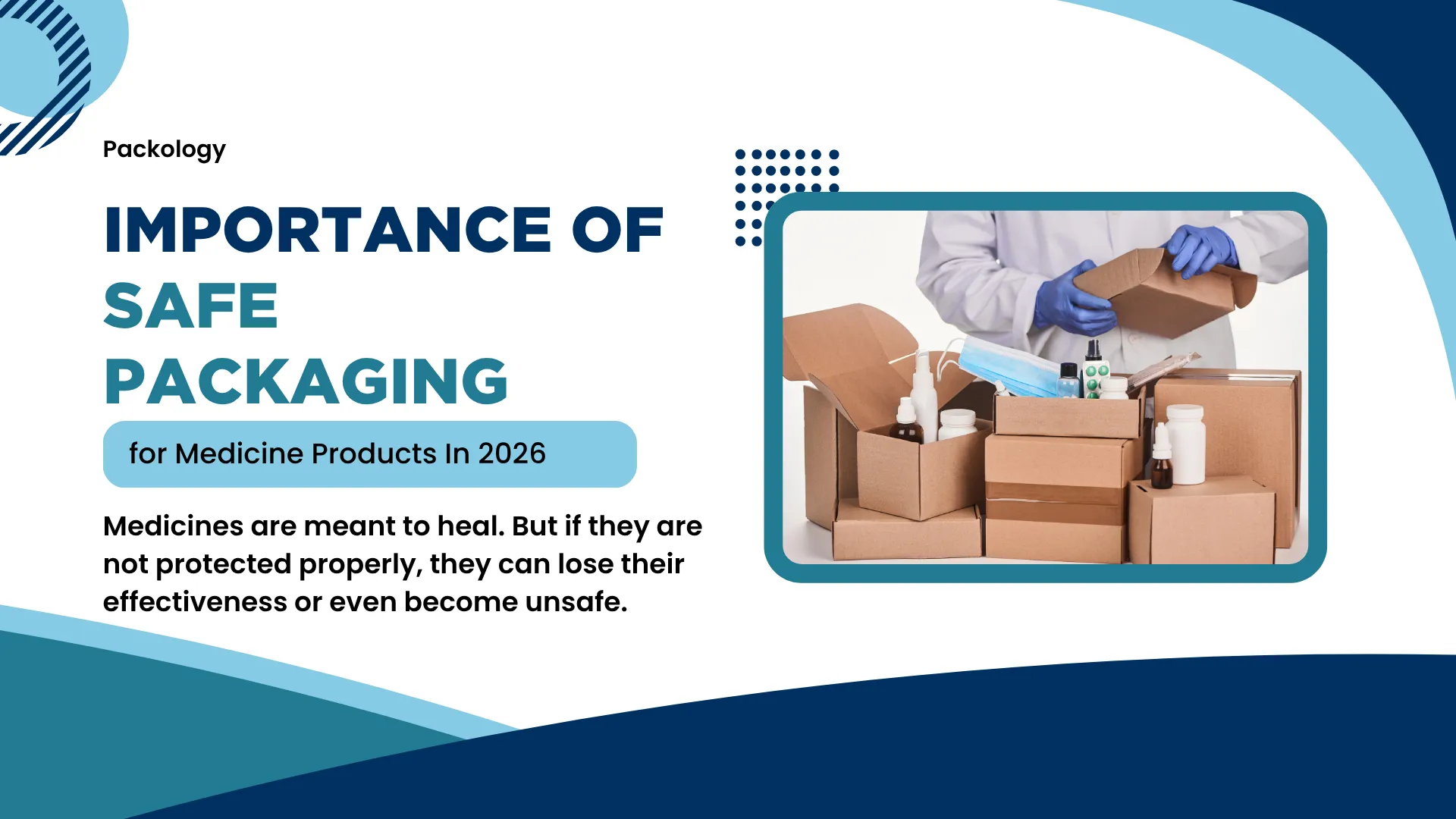
Medicines are meant to heal. But if they are not protected properly, they can lose their effectiveness or even become unsafe.
This is why safe packaging for medicine products is one of the most important parts of the pharmaceutical supply chain. It is not just a box. It is a layer of protection that keeps medicines pure, stable, and trustworthy.
Good packaging protects the medicine inside. It also protects the patient who depends on it. And it protects the brand that makes it.
In this guide, we will explain why safe packaging for medicine products matters, what safe medicine packaging solutions look like, and how businesses can choose the right packaging partner.
We will also cover pharmaceutical packaging safety, medicine product packaging standards, and the future of protective pharma packaging. Whether you are a manufacturer, a healthcare brand, or a pharmacy, this guide will help you understand what truly safe medicine packaging looks like.
What Is Safe Packaging for Medicine Products?
Safe packaging for medicine products means packaging that protects medicines from damage, contamination, and misuse from the factory to the patient’s hand.
It is designed to shield medicines from moisture, heat, light, air, physical shock, and tampering. Each of these factors can weaken or spoil a medicine if packaging fails.
Moisture can cause tablets to soften or capsules to stick together. Heat can break down active ingredients. Light exposure can degrade sensitive formulations over time.
Contamination is another serious risk. Dust, bacteria, or foreign particles entering a package can make a medicine unsafe to consume.
Safe medicine packaging also prevents leakage in liquid products and breakage in glass vials or bottles. Proper cushioning and sealing reduce the chances of damage during handling.
In short, secure medicine packaging is a combination of the right material, the right structure, and the right design working together to protect what is inside.
Importance of Medicine Packaging in the Pharmaceutical Industry
The importance of medicine packaging goes far beyond appearance. It affects manufacturers, healthcare brands, pharmacies, hospitals, and patients alike.
For manufacturers, packaging protects the product from the moment it leaves the production line. It reduces returns, damage claims, and wastage caused by poor handling.
For healthcare brands, packaging is part of the promise made to customers. A well-packaged medicine signals quality, care, and professionalism.
For pharmacies and hospitals, easy-to-handle and clearly labeled packaging reduces the chance of dispensing errors. This directly supports patient safety.
For patients, packaging is often the first physical interaction with a medicine. Tamper-resistant seals and clear dosage information build immediate confidence.
Packaging also plays a role in dosage safety. Blister packs, for example, help patients track exactly how many tablets they have taken.
Tamper resistance is another critical piece. It reassures patients that the product has not been opened or altered before reaching them.
Finally, packaging supports storage safety. Sturdy boxes and correctly sealed containers help medicines stay stable while sitting on a shelf for months.
Why Pharmaceutical Packaging Safety Matters
Pharmaceutical packaging safety is about far more than looking presentable. It directly affects whether a medicine remains safe and effective for the patient who uses it.
Contamination control is one of the biggest concerns. Packaging must create a barrier that keeps out dust, moisture, and microbes throughout the product’s shelf life.
Tamper-evident packaging is equally important. Seals, shrink bands, and breakable caps show immediately if a package has been opened before sale.
Child-resistant packaging protects young children from accidentally accessing medicines that could harm them. This is especially critical for strong or restricted formulations.
Product stability also depends on packaging. Certain medicines are sensitive to temperature changes, and the wrong packaging material can accelerate spoilage.
Safe transportation is the final piece of the puzzle. Medicines often travel long distances by road, air, or sea before reaching a pharmacy shelf.
Strong, well-designed secondary packaging protects against vibration, stacking pressure, and rough handling during this journey.
Together, these factors make pharmaceutical packaging safety a core responsibility, not an afterthought, for every brand in the healthcare space.
Key Features of Safe Medicine Packaging Solutions
Truly safe medicine packaging solutions share a common set of features. These features work together to protect the product and the patient.
- Durable material: Strong paperboard or corrugated material that resists crushing and rough handling.
- Moisture protection: Coatings or laminations that keep humidity away from sensitive contents.
- Heat resistance: Materials that help maintain stable internal temperature during storage.
- Light protection: Opaque or UV-resistant packaging for light-sensitive formulations.
- Tamper-evident design: Seals or bands that show clear signs if the pack has been opened.
- Clear labeling space: Enough surface area for dosage, batch, and expiry details to be printed clearly.
- Proper sealing: Airtight closures that prevent contamination and leakage.
- Leak-proof structure: Especially important for syrups, drops, and liquid formulations.
- Hygienic packaging: Materials and processes that meet cleanliness expectations for healthcare products.
- Easy handling: Practical shapes and sizes for pharmacists, hospital staff, and patients.
- Custom size and shape: Packaging built around the exact product, not a generic fit.
When all these features come together, the result is reliable packaging for medicine products that performs well at every stage of the journey.
Protective Packaging for Medicines During Storage and Transport
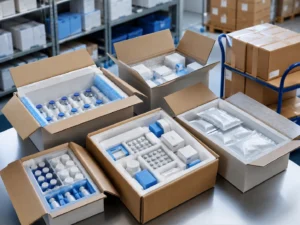
Protective packaging for medicines plays a major role once the product leaves the manufacturing unit. Warehousing, shipping, and retail handling all bring new risks.
During warehousing, medicines are often stacked in bulk. Packaging needs enough compression strength to bear this weight without collapsing or damaging the contents inside.
During shipping and logistics, shock resistance becomes essential. Roads, loading docks, and transit vehicles expose packages to bumps, drops, and vibration.
Temperature control is another key factor, especially for medicines that are sensitive to heat or cold. Insulated secondary packaging can help maintain a more stable environment.
Secondary packaging, such as outer cartons or corrugated boxes, adds an extra layer of protection around the primary pack. This reduces the risk of damage before the product reaches the pharmacy.
Retail handling is the final stretch. Packaging must survive shelf placement, customer handling, and repeated movement without losing its protective qualities.
Strong protective packaging for medicines is what allows a product to travel safely from the factory floor to the patient’s home.
Medicine Product Packaging Standards Every Brand Should Follow
Medicine product packaging standards exist to protect patients and maintain consistency across the pharmaceutical industry. These standards can vary depending on the country, product category, and regulatory body involved.
Generally, they cover areas such as material safety, labeling accuracy, tamper-evidence, child-resistant design, and storage condition guidelines.
Following the applicable standards for your region and product type is essential for legal compliance and patient safety.
This article does not offer legal advice. Packaging standards and pharmaceutical regulations change frequently and differ by market.
Brands should always consult qualified regulatory or compliance experts to confirm the exact packaging standards applicable to their specific products and target markets.
A trusted packaging partner can still help by designing structures that are built with safety, durability, and labeling flexibility in mind, so that meeting formal standards becomes easier.
Types of Secure Packaging for Pharmaceutical Products
Different medicines need different types of secure packaging. Here are some of the most common formats used across the pharmaceutical industry.
- Mono cartons for medicines: Lightweight yet sturdy boxes used for tablets, capsules, and general medicine packs.
- Rigid boxes for premium healthcare products: Thicker, high-end boxes often used for premium supplements or gifting-style healthcare items.
- Blister packaging support boxes: Outer boxes designed to hold and protect blister strips securely.
- Syrup bottle packaging: Cartons designed to snugly hold glass or plastic syrup bottles and prevent movement.
- Dropper bottle packaging: Compact boxes built for small dropper bottles used in liquid dosage medicines.
- Injection vial packaging: Specialized inserts and boxes that protect fragile glass vials from breakage.
- Tablet and capsule packaging boxes: Structured boxes that hold blister sheets or bottles of tablets and capsules.
- Healthcare kit packaging: Multi-compartment boxes used for combination kits or first-aid style products.
- Medical device packaging: Protective packaging designed around the shape of medical instruments or devices.
- Supplement packaging boxes: Boxes built for nutraceutical and wellness products, balancing safety with shelf appeal.
Each of these packaging types is engineered around the specific risks the product may face, from breakage to leakage to contamination.
Role of Custom Packaging in Medicine Product Safety
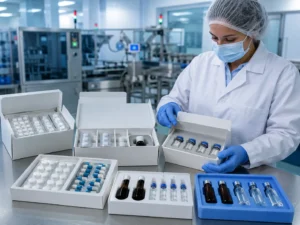
Customized packaging plays a direct role in medicine product safety. A generic, one-size-fits-all box rarely offers the same level of protection as a design built around the actual product.
Custom-fit packaging reduces internal movement. When a bottle or blister strip sits snugly inside its box, it is far less likely to shift, crack, or leak during transit.
Custom inserts and partitions add another layer of safety. They keep multiple items separated and cushioned, which is especially useful for kits or multi-unit packs.
Printed instructions on custom packaging help patients use the medicine correctly. Clear dosage steps reduce the chance of misuse.
Batch information space is another important custom feature. Dedicated areas for batch numbers, manufacturing dates, and expiry dates support traceability and safety recalls if ever needed.
Custom packaging can also include barcode or QR code support. This allows for easy verification, inventory tracking, and even anti-counterfeit checks by pharmacies or patients.
Overall, custom packaging turns a simple container into a functional safety tool, tailored to the exact needs of the product it holds.
Common Risks of Poor Medicine Packaging
Poor packaging does not just look unprofessional. It creates real risks for patients, brands, and the entire supply chain.
- Product damage: Weak materials or poor design can crush, dent, or break the medicine inside.
- Leakage: Faulty seals can allow liquid medicines to spill or evaporate.
- Contamination: Gaps in packaging can let in dust, moisture, or microbes.
- Wrong handling: Confusing or unclear packaging can lead to incorrect storage or usage.
- Label damage: Poor quality printing or lamination can cause labels to fade or peel off.
- Loss of patient trust: Damaged or unprofessional packaging makes patients doubt the product’s quality.
- Regulatory issues: Non-compliant packaging can lead to warnings, rejections, or market withdrawal.
- Reduced shelf life: Weak barrier protection can shorten how long a medicine stays effective.
- Unsafe delivery experience: Poor packaging can result in products arriving broken, leaking, or opened.
Each of these risks is preventable with the right packaging strategy. This is exactly why safe packaging for medicine products should never be treated as a low-priority decision.
How Safe Packaging Builds Trust in Medicine Brands
Safe packaging for medicine products does more than protect the item inside. It shapes how patients, doctors, and pharmacies perceive the brand.
When a package looks sturdy, clean, and well-sealed, patients naturally feel more confident about the medicine inside it.
Doctors and healthcare professionals also notice packaging quality. Consistent, professional packaging can reinforce their trust in a brand’s overall reliability.
Pharmacies are more likely to stock and recommend products that arrive in good condition and are easy to store and dispense.
Tamper-evident features add another layer of confidence, showing patients that the product has not been touched before it reached them.
Over time, this consistent trust translates into repeat business. Patients and healthcare providers return to brands they know will deliver a safe, reliable product every time.
In a competitive healthcare market, safe packaging quietly becomes one of the strongest tools for building long-term brand credibility.
Sustainable and Safe Medicine Packaging Solutions
Sustainability and safety are not opposites. Many safe medicine packaging solutions today are being designed with the environment in mind as well.
Recyclable paperboard is one of the most common eco-conscious choices. It offers strong protection while remaining easier to recycle after use.
Responsible material selection is another growing focus. Brands are choosing suppliers and materials that reduce environmental impact without compromising durability.
Minimal waste design helps as well. Thoughtful structural design can reduce excess material while still maintaining strength and protection.
Durable packaging structure also supports sustainability indirectly. Packaging that survives transport without damage reduces the need for replacements and reduces overall waste.
The goal is a balance: protective pharma packaging that keeps medicines safe while also being more responsible toward the planet.
How to Choose the Right Packaging Partner for Medicine Products
Choosing the right packaging partner is one of the most important decisions a pharmaceutical or healthcare brand can make. Here is what to look for.
- Experience in pharmaceutical packaging: A partner who understands the unique needs of medicine and healthcare products.
- Material quality: Consistent use of durable, safe, and compliant packaging materials.
- Customization ability: The flexibility to design packaging around your exact product shape and size.
- Printing quality: Sharp, accurate printing for labels, instructions, and branding.
- Bulk production capacity: The ability to scale up production without compromising quality or timelines.
- Safety-focused design: A design process that prioritizes protection, not just appearance.
- Timely delivery: Reliable production and shipping schedules that support your supply chain.
- Understanding of medicine product packaging standards: Awareness of general industry expectations, paired with advice to consult compliance experts for exact regulations.
- Reliable quality checks: Strong internal testing to catch issues before packaging reaches you.
A packaging partner who checks all these boxes becomes more than a vendor. They become a long-term partner in your brand’s safety and reputation.
Safe Medicine Packaging Solutions for Different Healthcare Products
Different healthcare products need different packaging approaches. Here is a closer look at some common categories.
Tablet and Capsule Packaging
Tablet and capsule packaging usually involves blister support boxes or bottle cartons. The focus is on moisture protection, tamper-evidence, and clear dosage labeling.
Syrup and Liquid Medicine Packaging
Syrup and liquid medicine packaging needs strong leak-proof design. Snug-fit cartons help hold bottles securely and prevent movement during transit.
Injection and Vial Packaging
Injection and vial packaging demands extra cushioning. Custom inserts protect fragile glass vials from breakage and cross-contact damage.
Ayurvedic and Herbal Medicine Packaging
Ayurvedic and herbal medicine packaging often needs to balance traditional branding with modern protective standards, including moisture and light protection.
Nutraceutical and Supplement Packaging
Nutraceutical and supplement packaging focuses on freshness protection along with strong shelf appeal, since these products are often sold directly to consumers.
Medical Device Packaging
Medical device packaging must be shaped around the device itself, offering shock resistance and secure placement to prevent movement or damage.
Future of Pharmaceutical Packaging Safety
Pharmaceutical packaging safety continues to evolve alongside technology and patient expectations. Several trends are shaping what comes next.
Smart packaging is gaining attention, using features like sensors or freshness indicators to give more insight into a product’s condition.
QR code verification is becoming more common, allowing patients and pharmacies to confirm authenticity with a quick scan.
Anti-counterfeit packaging is also advancing, using specialized printing, holograms, or unique codes to reduce the risk of fake products entering the market.
Improved tamper-proof designs continue to develop, making it even harder for packaging to be opened and resealed without visible evidence.
Sustainable materials are becoming a bigger part of the conversation, as brands look for ways to remain protective while reducing environmental impact.
Better patient information systems, including printed and digital guidance, are helping patients understand dosage and usage more clearly than ever before.
Together, these trends point toward a future where safe packaging for medicine products is smarter, more transparent, and more patient-focused.
Conclusion
Safe packaging for medicine products is not a small detail. It is a core part of product safety, patient trust, brand reputation, and long-term business success.
From protecting against moisture and contamination to supporting safe transport and building patient confidence, packaging touches nearly every part of the pharmaceutical journey.
Brands that invest in secure medicine packaging, custom design, and reliable materials set themselves apart in a market where trust matters more than ever.
If your business is ready to choose safe, protective, and secure packaging for pharmaceutical products, working with an experienced packaging partner is the right place to start.
Frequently Asked Questions
What is the importance of medicine packaging?
Medicine packaging protects the product, supports dosage accuracy, builds patient trust, and helps brands meet handling and storage requirements throughout the supply chain.
What is pharmaceutical packaging safety?
Pharmaceutical packaging safety refers to design and material choices that prevent contamination, tampering, and damage while keeping medicines stable and secure.
What are safe medicine packaging solutions?
Safe medicine packaging solutions include moisture-resistant materials, tamper-evident seals, leak-proof structures, and custom-fit designs suited to the specific product.
How does protective packaging help medicines?
Protective packaging shields medicines from shock, temperature changes, and compression during storage and transport, reducing the risk of damage or spoilage.
What are medicine product packaging standards?
Medicine product packaging standards are safety, labeling, and material guidelines set by regulatory bodies, and they vary by country and product type, so brands should consult compliance experts for exact requirements.
What makes packaging secure for pharmaceutical products?
Secure pharmaceutical packaging combines durable materials, proper sealing, tamper-evident features, and clear labeling to protect both the product and the patient.
Which packaging is best for medicine products?
The best packaging depends on the product type, such as blister support boxes for tablets, leak-proof cartons for syrups, or cushioned boxes for injection vials.
How can custom packaging improve medicine safety?
Custom packaging reduces movement, adds protective inserts, and includes space for batch details and instructions, all of which improve overall product safety.
How do I choose a medicine packaging manufacturer?
Choose a manufacturer with pharmaceutical packaging experience, strong material quality, customization options, and a clear focus on safety and compliance awareness.